01 / MARSOBSERVED SURFACE · OPEN QUESTION
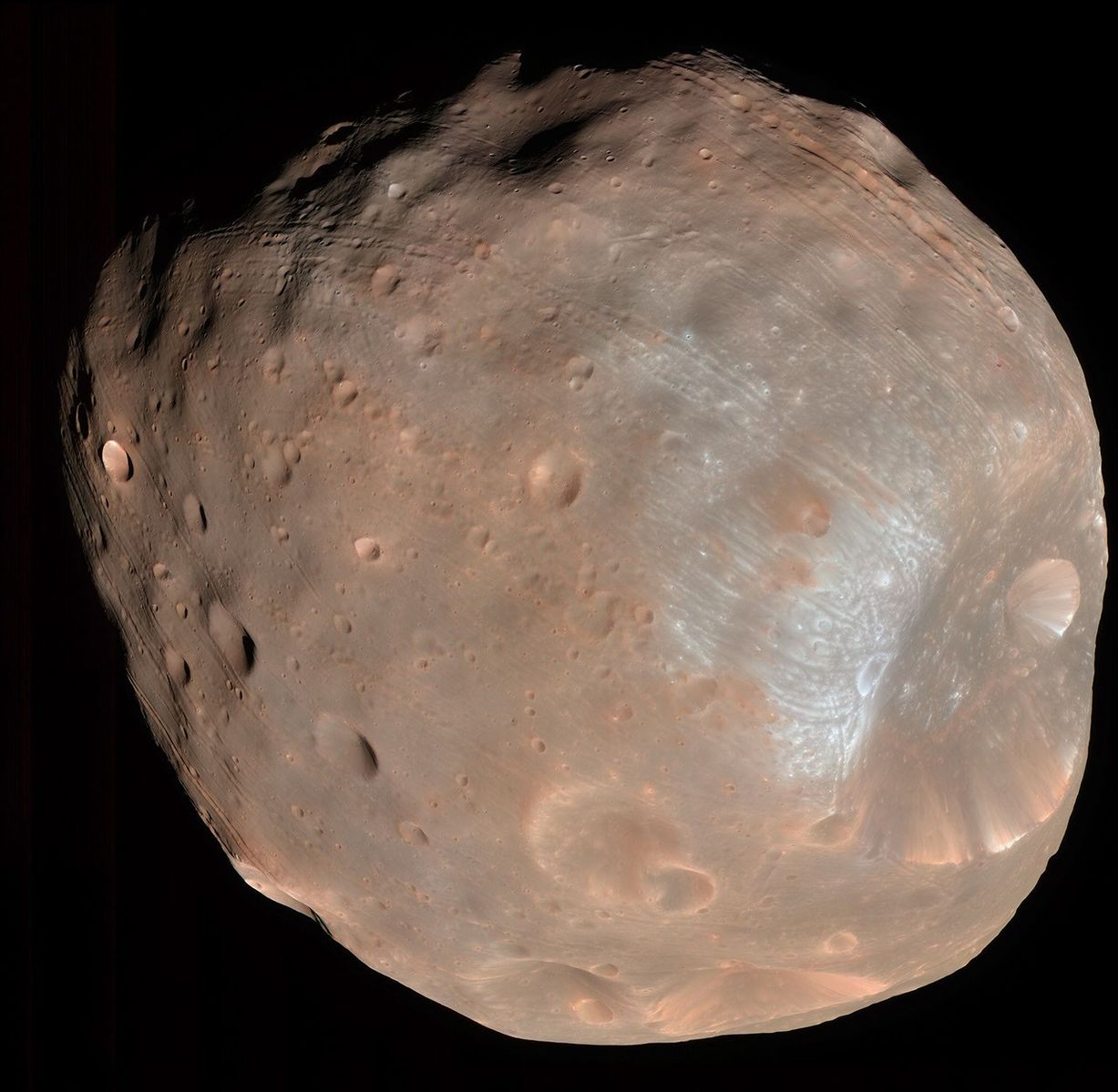
Phobos
A moon with a scar nearly its own size.
Stickney crater dominates this small, irregular moon. Its long grooves are real; how all of them formed is still debated.
View original image and context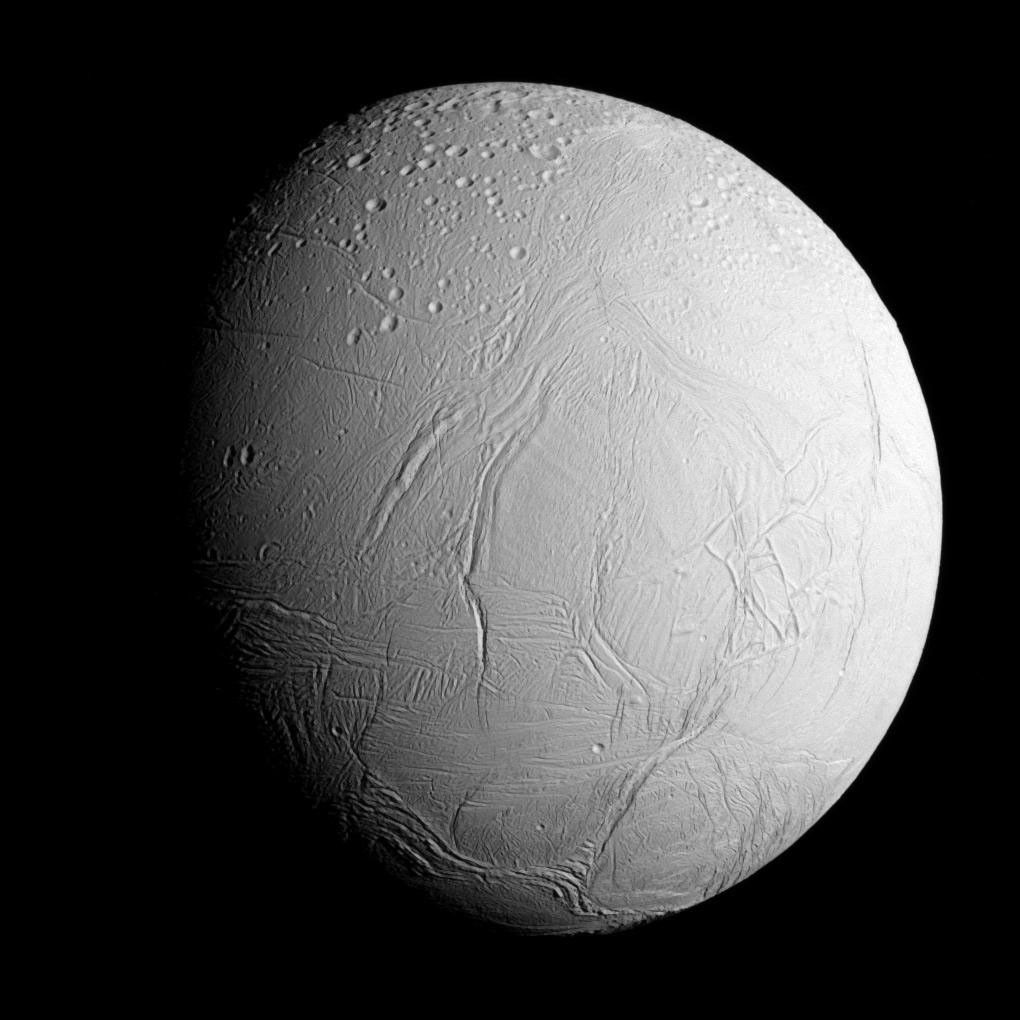
ATLAS / MOONS
01 — 12 / A CURATED FIELD GUIDE
01 / MARSOBSERVED SURFACE · OPEN QUESTION
Stickney crater dominates this small, irregular moon. Its long grooves are real; how all of them formed is still debated.
View original image and context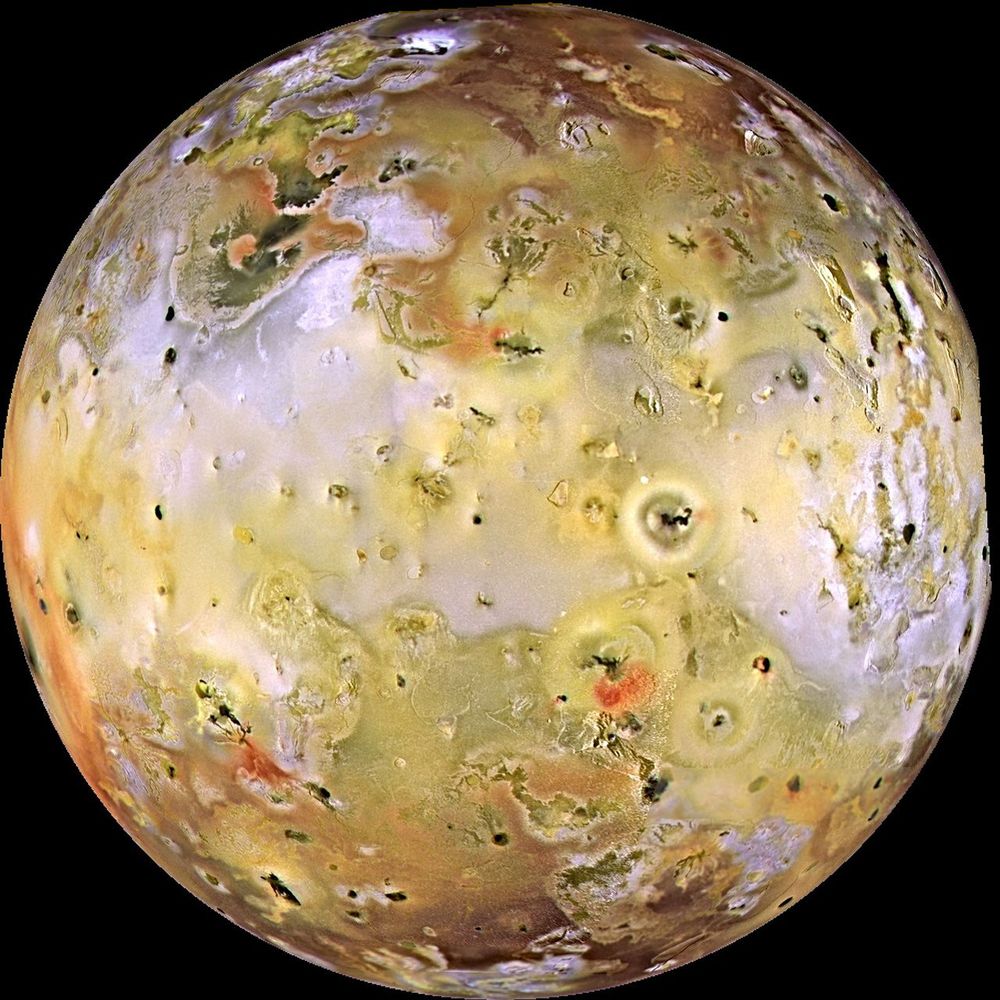
02 / JUPITEROBSERVED ACTIVITY
Jupiter's gravity and its neighbouring moons knead Io's interior. Spacecraft have witnessed eruptions and a surface continually repainted by volcanism.
View original image and context
03 / JUPITEROBSERVED ICE · INFERRED OCEAN
Galileo saw a fractured icy shell. Multiple lines of evidence point to a salty ocean below it; Europa Clipper will investigate whether the moon has conditions that could support life.
View original image and context Follow Europa Clipper →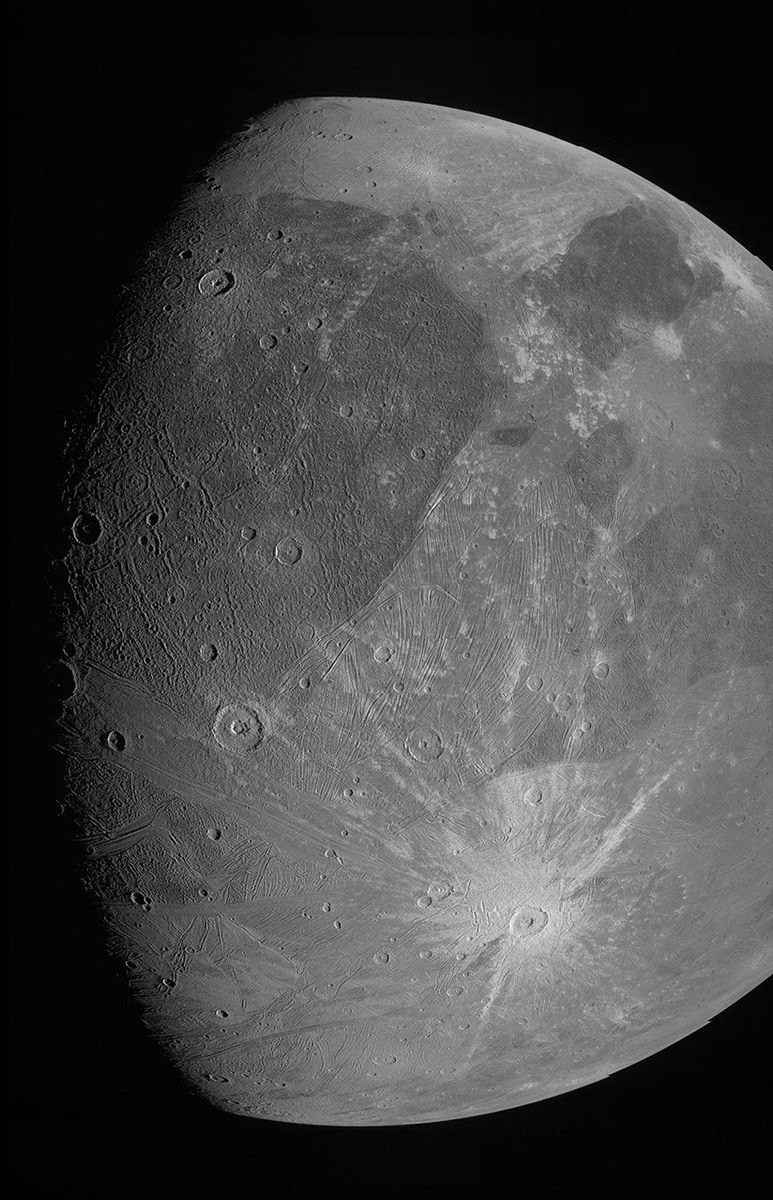
04 / JUPITEROBSERVED FIELD · INFERRED OCEAN
The Solar System's largest moon generates a magnetic field and is thought to hide a saltwater ocean. ESA's Juice mission will study it in remarkable detail.
View original image and context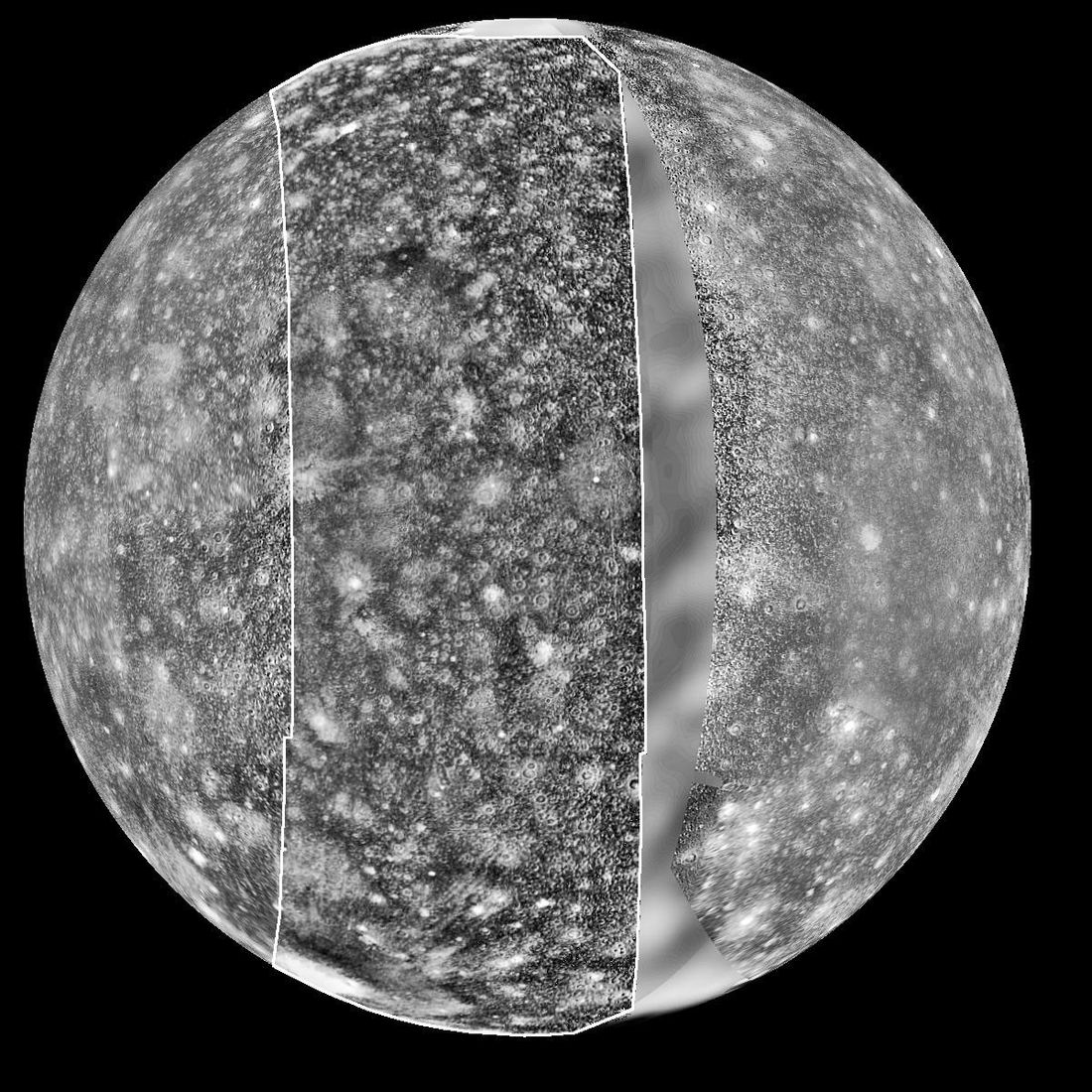
05 / JUPITEROBSERVED CRATERS · POSSIBLE OCEAN
Heavily cratered and ancient-looking, Callisto holds a long record of collisions. Magnetic measurements suggest a salty ocean may lie far beneath its battered exterior.
View original image and contextOFFICIAL FILM · ESA / JUICE
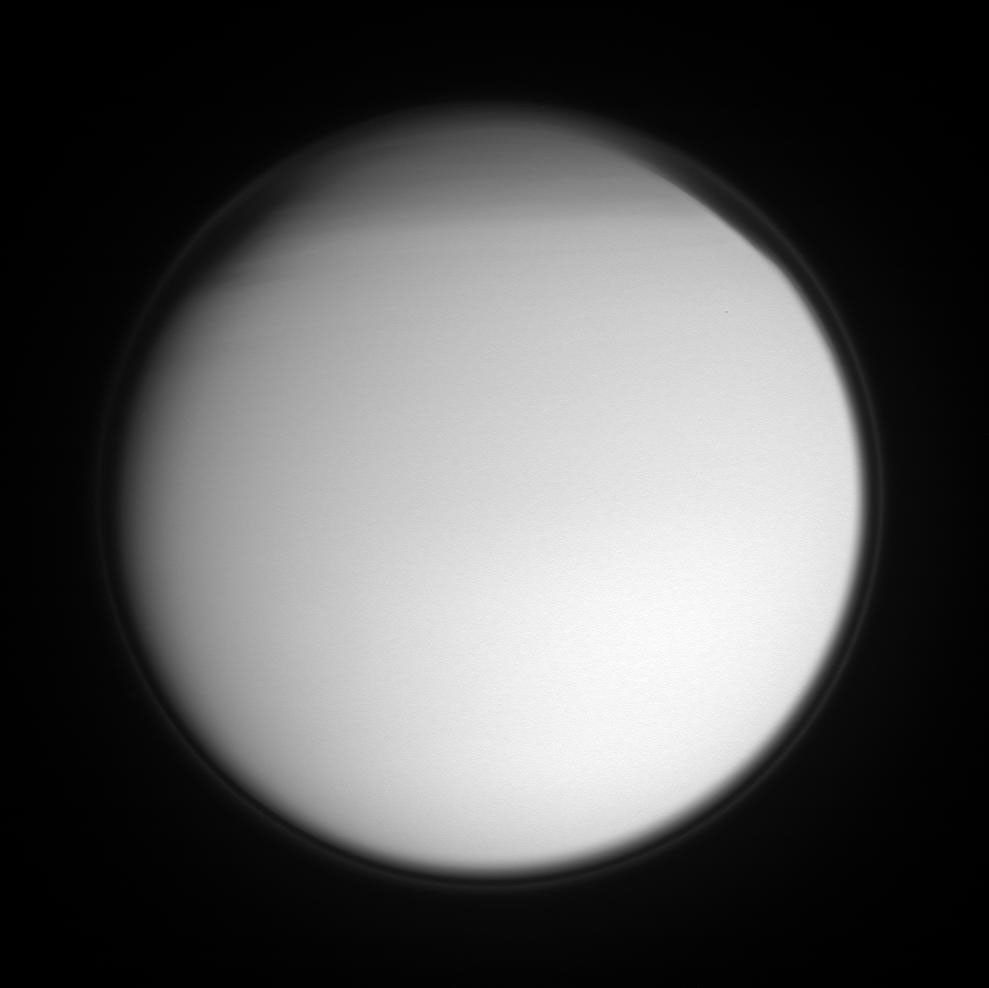
06 / SATURNOBSERVED LANDSCAPES · FUTURE EXPLORATION
Cassini–Huygens revealed a world with a thick atmosphere and a methane cycle. Dragonfly will investigate its surface chemistry and landscape.
View original image and context Enter Titan →
07 / SATURNOBSERVED PLUMES · INFERRED INTERIOR
Cassini photographed jets escaping from fractures near the south pole and sampled their material. The plumes reveal a global ocean and evidence of hydrothermal activity below the ice—not evidence of life itself.
Cassini took these views one day apart at similar distances. Facing the Sun, the ice shines. Seen nearly against it, the south-polar spray becomes visible. Different viewing angles—not a sudden eruption.
View original image and context Watch Cassini's plume sequence · NASA
08 / SATURNOBSERVED SURFACE
Herschel crater spans a striking fraction of this little moon.
View original image and context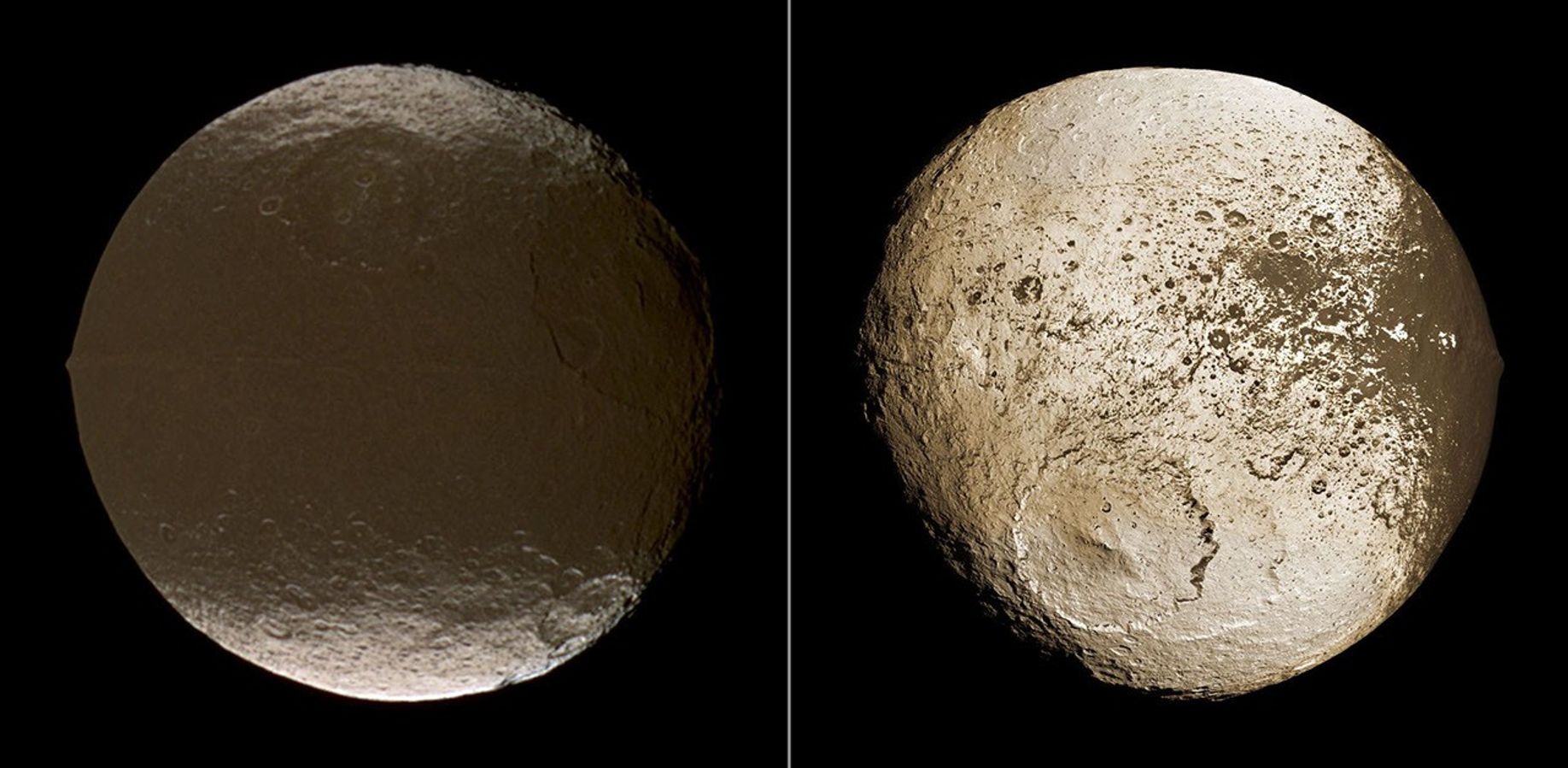
09 / SATURNOBSERVED CONTRAST · OPEN QUESTION
One hemisphere is dark, the other bright. An immense equatorial ridge makes Iapetus stranger still, while the ridge's origin remains unresolved.
View original image and context
10 / SATURNOBSERVED SURFACE · CHAOTIC ROTATION
Cassini saw a pitted, sponge-like surface. Hyperion tumbles chaotically as it circles Saturn: unlike most large moons, it does not present a predictable face.
View original image and context
11 / URANUSOBSERVED TERRAIN · OPEN QUESTION
Voyager 2 revealed towering scarps and wildly different terrains stitched together on one small moon. The history behind that geology is still debated.
View original image and context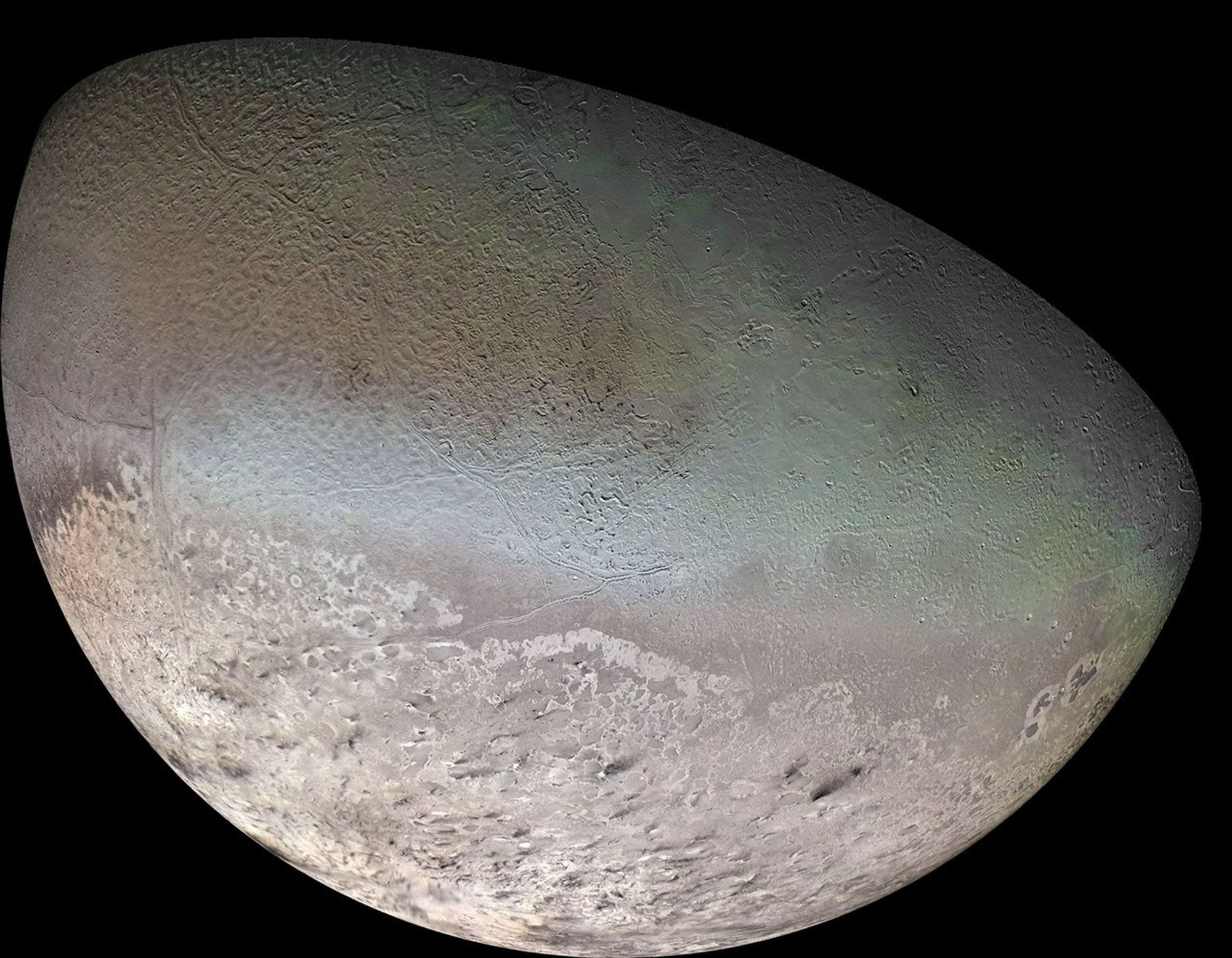
12 / NEPTUNEOBSERVED ORBIT · OBSERVED PLUMES
Triton orbits opposite Neptune's rotation. Voyager 2 also saw dark plumes rising above its icy surface.
View original image and context Follow Voyager →