Euclid
The cosmic web
Euclid tracks the distribution of galaxies and how gravity affects their light to study how the structure of the universe grew.
European Space Agency
The universe in depth
Euclid measures where galaxies are and how gravity distorts their light. Together, these clues help trace the cosmic web and reveal how it has changed over time.
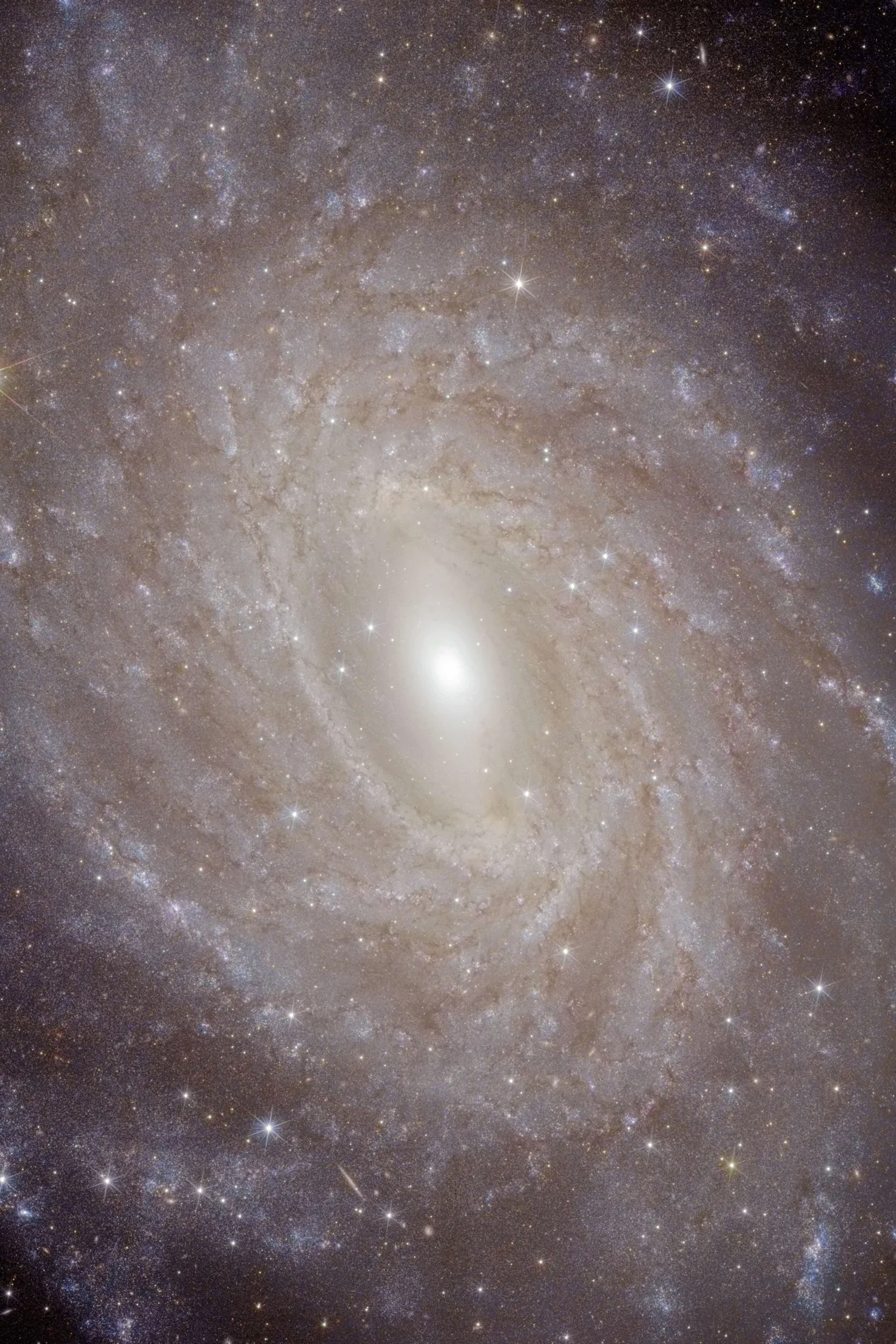
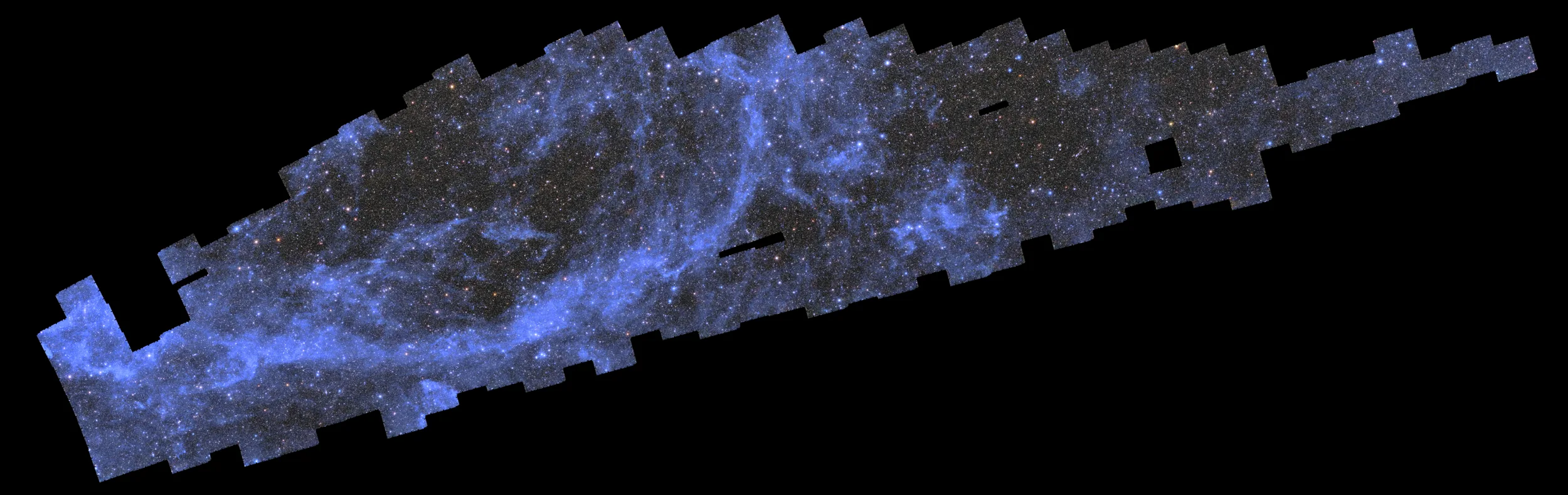
Explore the mosaicNGC 6744, observed by Euclid · ESA/Euclid/Euclid Consortium/NASA · J.-C. Cuillandre (CEA Paris-Saclay), G. Anselmi · CC BY-SA 3.0 IGO · Reframed for display
12 November 2026 · DR1 Foundation
Over 900 million
galaxies in Euclid’s first major data release
The release brings together images, catalogues and spectra. The wide-survey observations in this release cover nearly 5% of the entire sky. Redshift can add a distance estimate to a galaxy’s position on the sky, allowing astronomers to reconstruct how galaxies are distributed in three dimensions.
24 November 2026 · Euclid and Webb
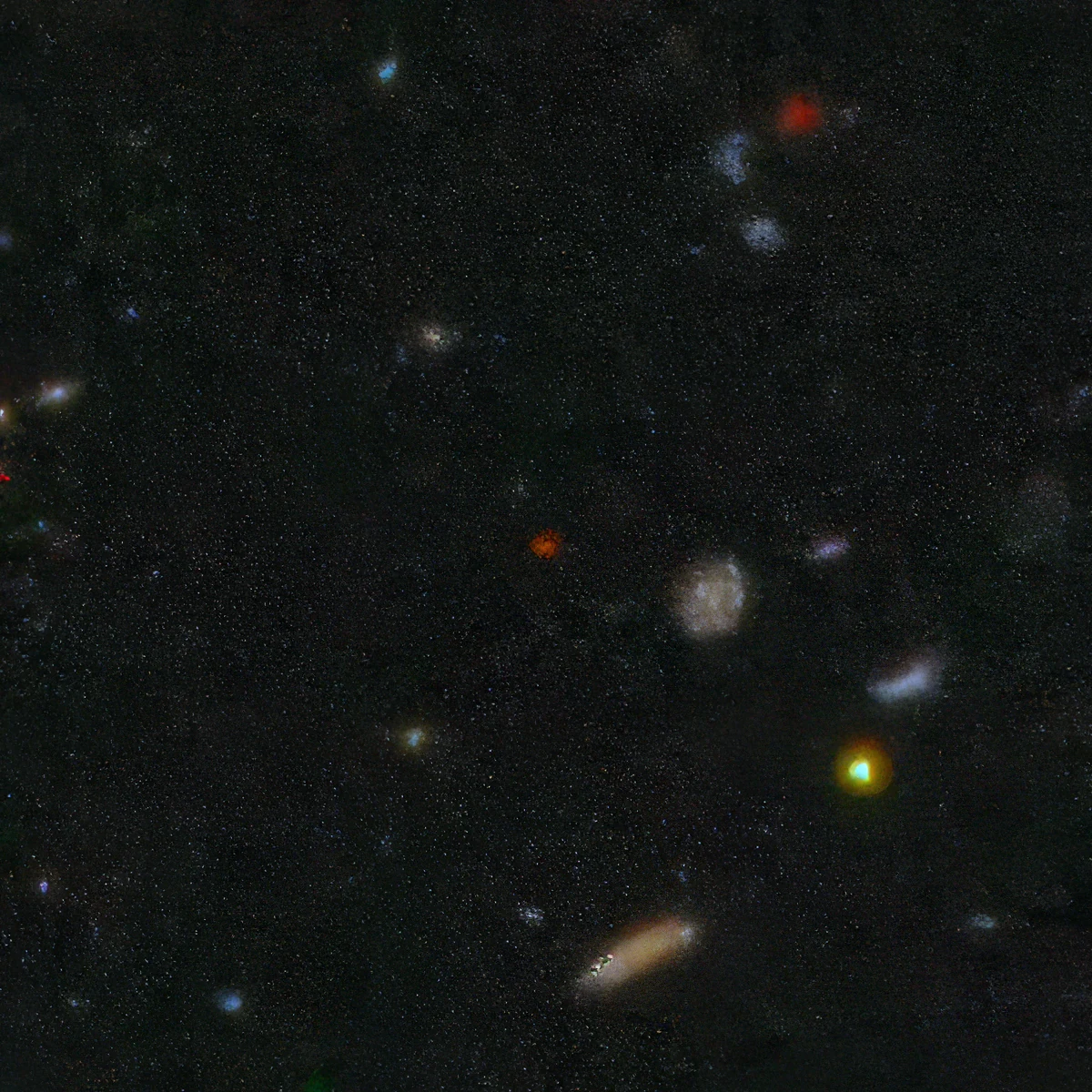
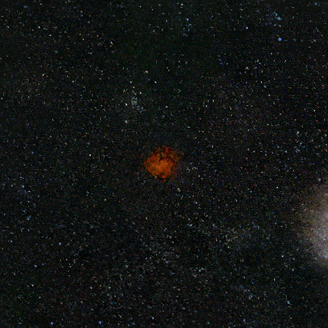
Light left that red dot at the heart of a galaxy when the Universe was just 630 million years old. Euclid picked it out among millions of objects. Follow-up observations, including those with Webb, confirmed it as the most distant quasar known at the time.
The Euclid field
A closer look at the centre
The circle marks quasar J1504+6252, nicknamed Dún Aonghasa. In the close-up, look for the reddish speck just above and to the left of the pale oval galaxy.
What we see is the glow of gas heating up as it falls towards a black hole. Using Webb, the team estimated that this black hole already held the mass of about 360 million Suns. At the time we see it, it was taking in matter relatively slowly. When could it have accumulated so much mass?
15 October 2024 · Southern sky
ESA combined 260 observations into a 208-gigapixel mosaic spanning 132 square degrees. Explore four official views, from the full panorama to the arms of a spiral galaxy.
Euclid · Gravitational lenses
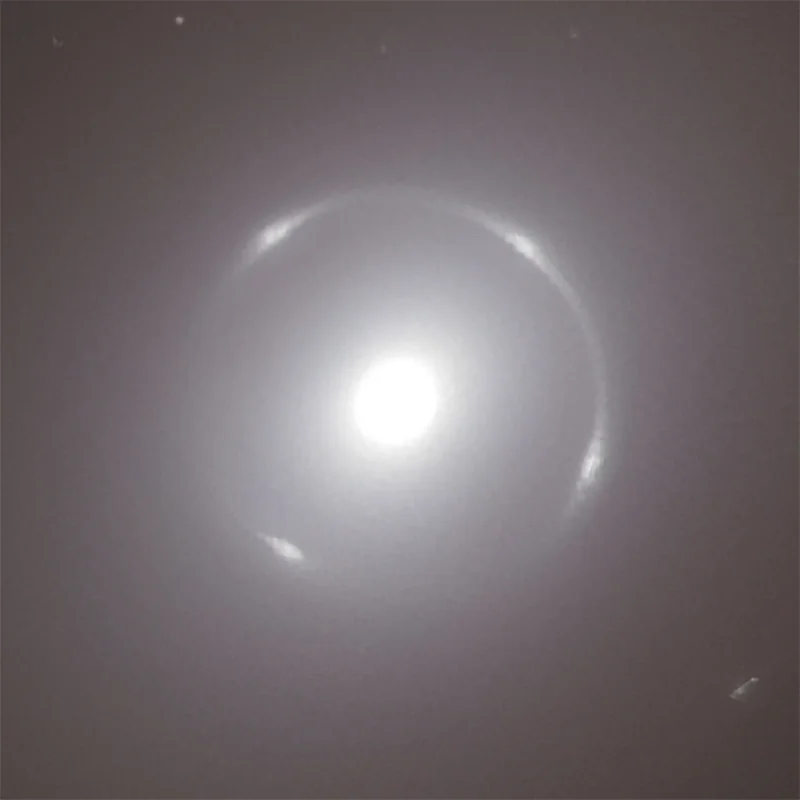
EspañolOne of these rings belongs to the galaxy you see. The other is made of light from much farther away. Select either image for a closer look. Try the visual challenge
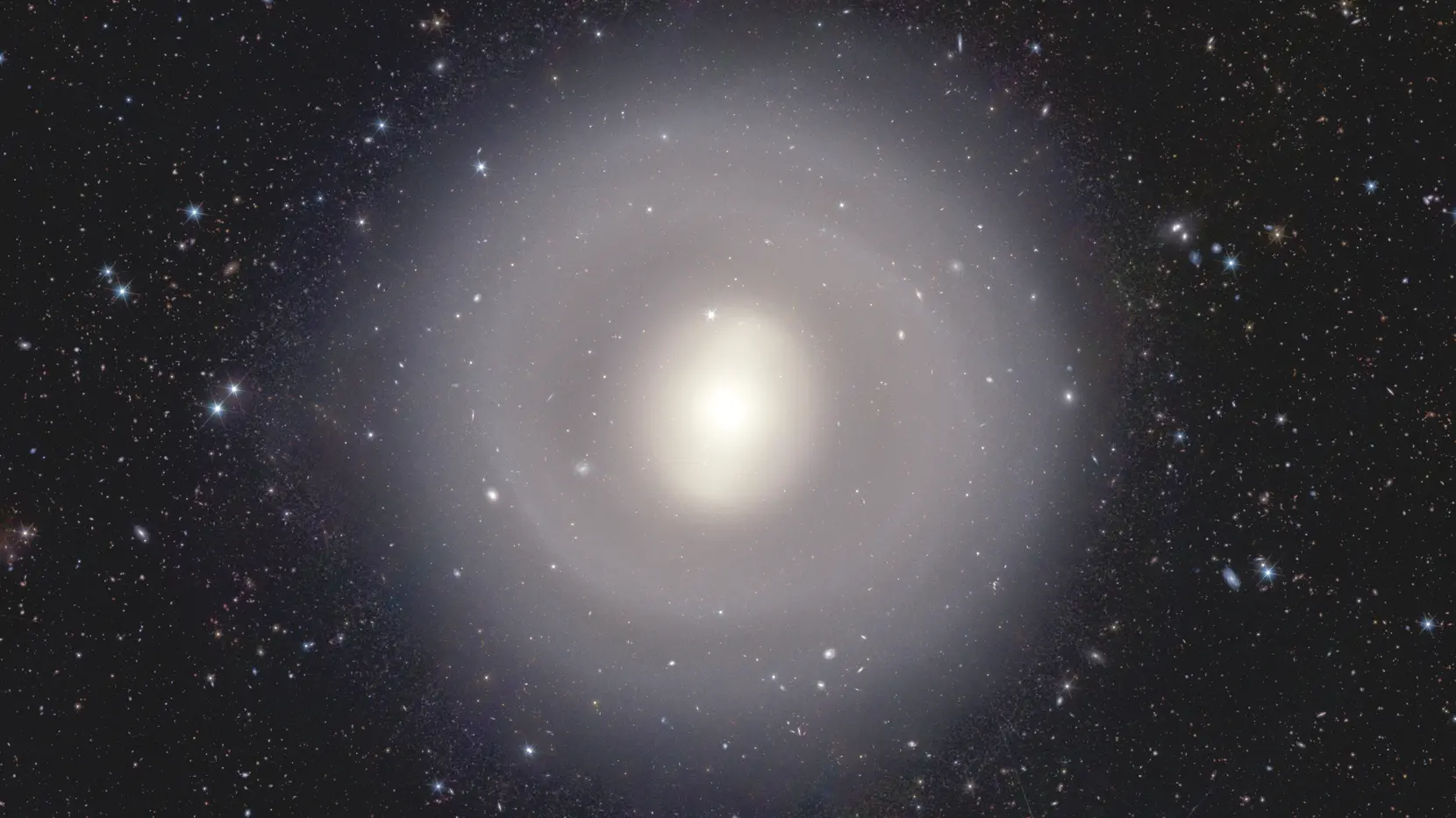
Look for the faint band around the edge of the disc. The stars in that ring belong to NGC 1291, just like the stars in its bright centre.
Follow the thin arc through its four bright patches. That light comes from a galaxy in the background. The gravity of NGC 6505 bends its light, so from Earth we see an Einstein ring.
NGC 1291 · ESA · ESA/Euclid/Euclid Consortium/NASA · Image processing: J.-C. Cuillandre and E. Bertin · CC BY-SA 3.0 IGO
NGC 6505 · ESA · ESA/Euclid/Euclid Consortium/NASA · Image processing: J.-C. Cuillandre, G. Anselmi and T. Li · CC BY-SA 3.0 IGO
Framing adapted for comparison. The photographs have different scales. Guide markers by LUME Gravity.
Gravitational lensing
When a galaxy or cluster lies along our line of sight, its gravity bends light from the galaxies behind it. The resulting distortion gives astronomers clues about the mass causing it, including dark matter.
Euclid and ARRAKIHS
The two ESA missions look for clues to dark matter in different phenomena.
Euclid
Euclid tracks the distribution of galaxies and how gravity affects their light to study how the structure of the universe grew.
ARRAKIHS
ARRAKIHS will look for faint starlight from haloes and stellar streams around galaxies like the Milky Way. The streams preserve traces of past mergers and can help test models of dark matter.
ARRAKIHS · LUME GravityThe two missions also share a technical challenge. At the International Space Science Institute (ISSI), specialists from both teams are working on image processing and using simulations to test which very faint structures each telescope can reveal.
Euclid–ARRAKIHS collaboration · ISSI