Parallax.
A star’s annual apparent shift against a distant background gives a geometric route to distance.
ESA · Gaia parallaxNEARBY STARS
For stars beyond the Sun, light and repeated observations reveal clues about temperature, atmospheric composition, motion and change over time.
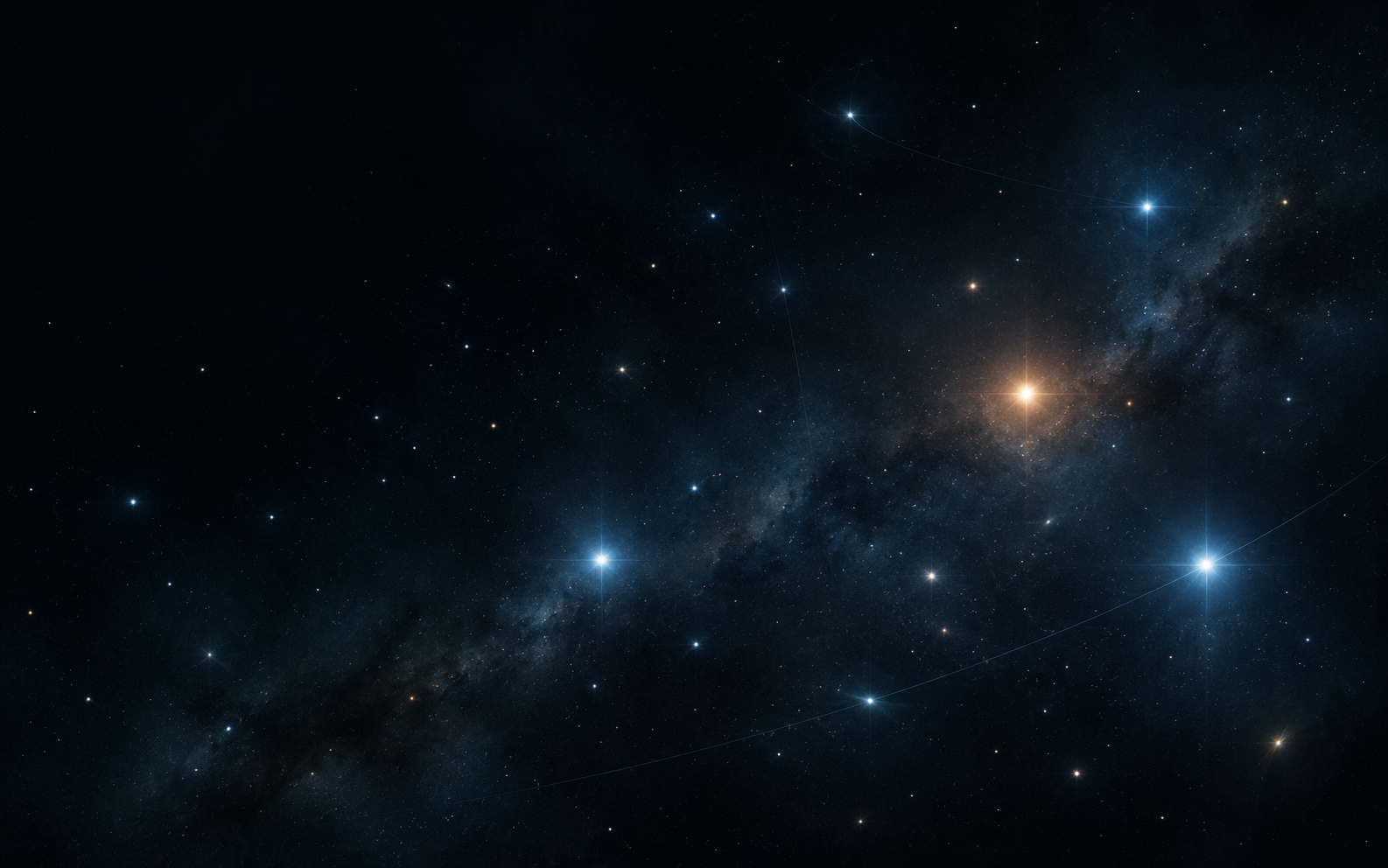
READING A STAR
A star’s annual apparent shift against a distant background gives a geometric route to distance.
ESA · Gaia parallaxAbsorption features in starlight help identify elements in a star’s atmosphere.
NASA · absorption spectraComparing many stars helps test models of formation, ageing and stellar death.
NASA · stellar life cyclesIN PERSPECTIVE / ANTARES
Antares is a red supergiant in Scorpius. Beside it, the Sun takes on a different scale: ESO’s 2017 study describes a diameter roughly 700 times the Sun’s and a mass around 12 times greater.
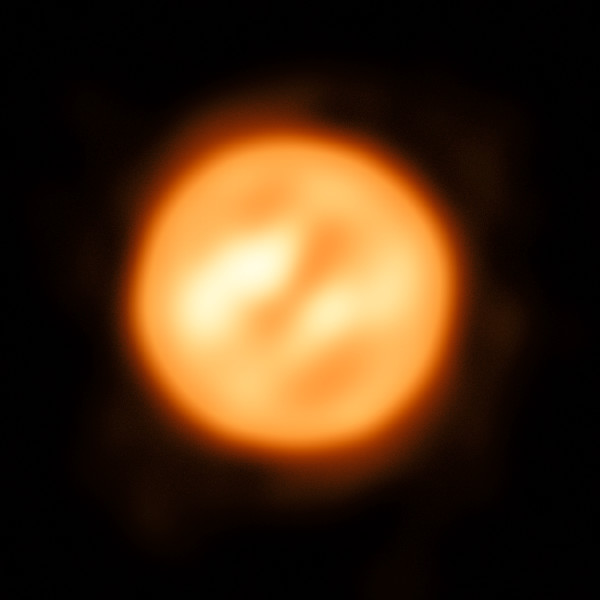
A star’s size and mass do not grow in step. These are approximate estimates, rather than fixed dimensions: a supergiant has an extended, changing atmosphere. ESO’s Very Large Telescope Interferometer resolved Antares’ surface and mapped motions in its atmosphere.
ESO · Antares observations and estimatesTHE WORK OF INTERPRETATION