 LUME GRAVITY
Saturn
The line Cassini saw
Look at the far right of the rings. A thin dark line runs between two bright arcs. Can you spot it?
Giovanni Domenico Cassini picked it out through his telescope in 1675. Today we call it the Cassini Division.
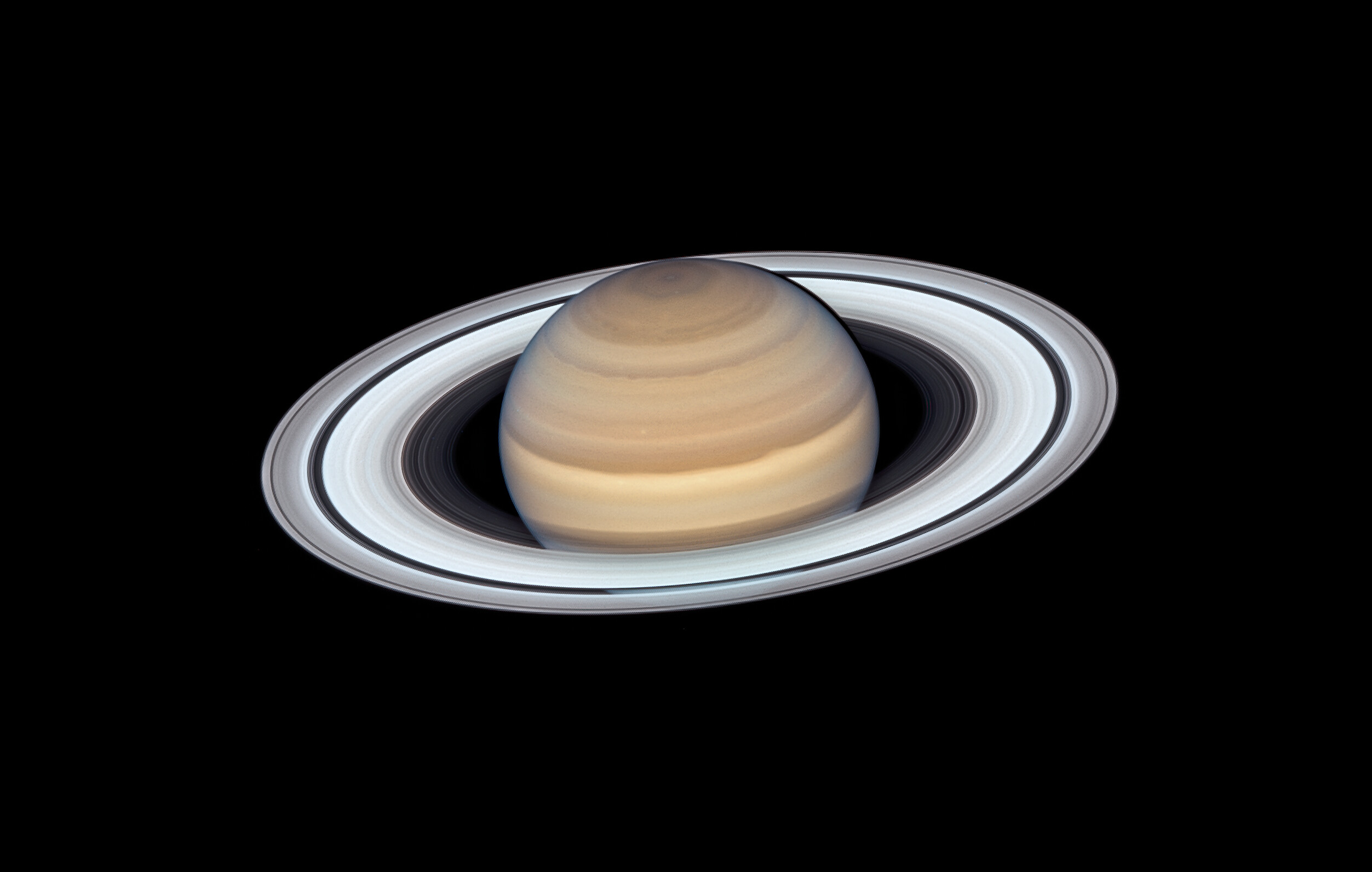
Rings A and B
What fits inside a line?
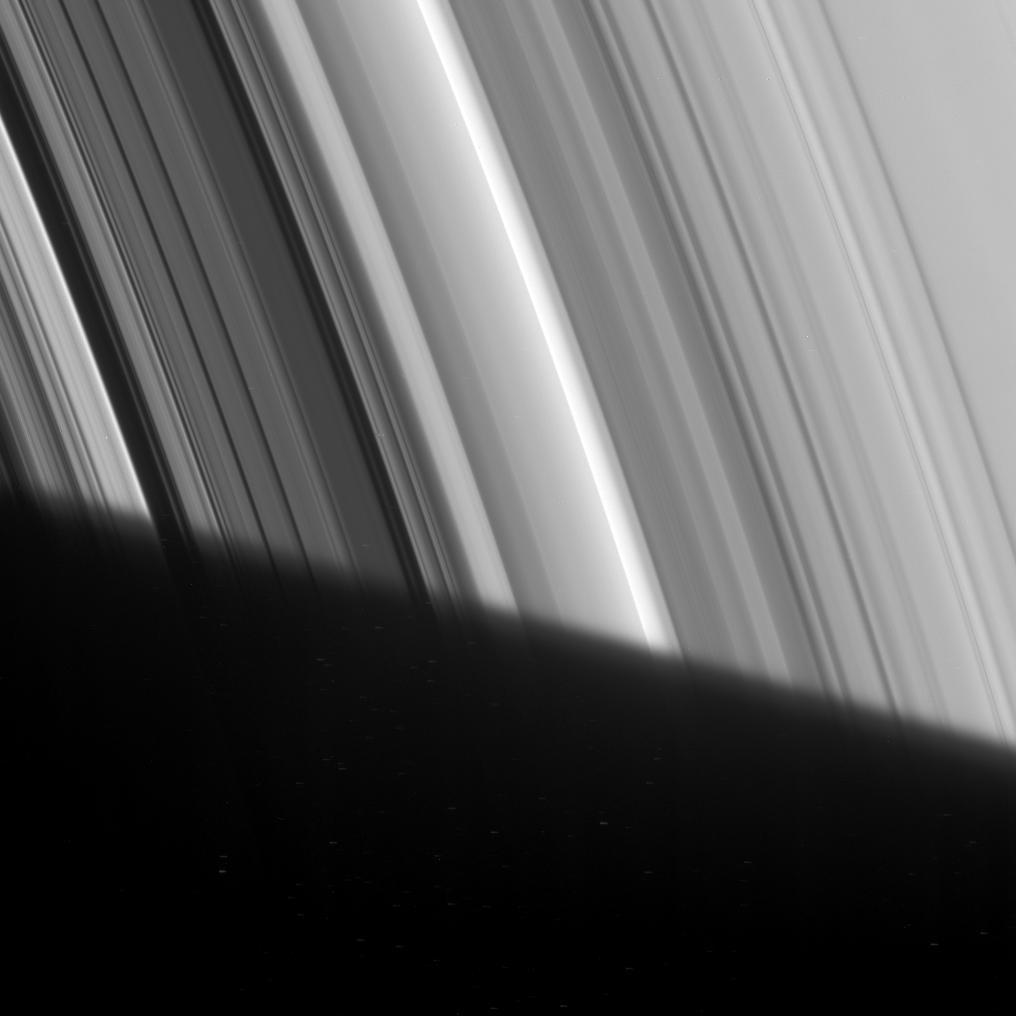
The spacecraft named for Cassini photographed that same division. That thin line spans some 4,800 km. Look inside and you can pick out a detail beyond the reach of his telescope.
Look to the left, between two dark grooves. You can pick out five faint bands of ring material. Saturn’s shadow crosses the bottom of the picture.
Iapetus
The moon that played hide-and-seek
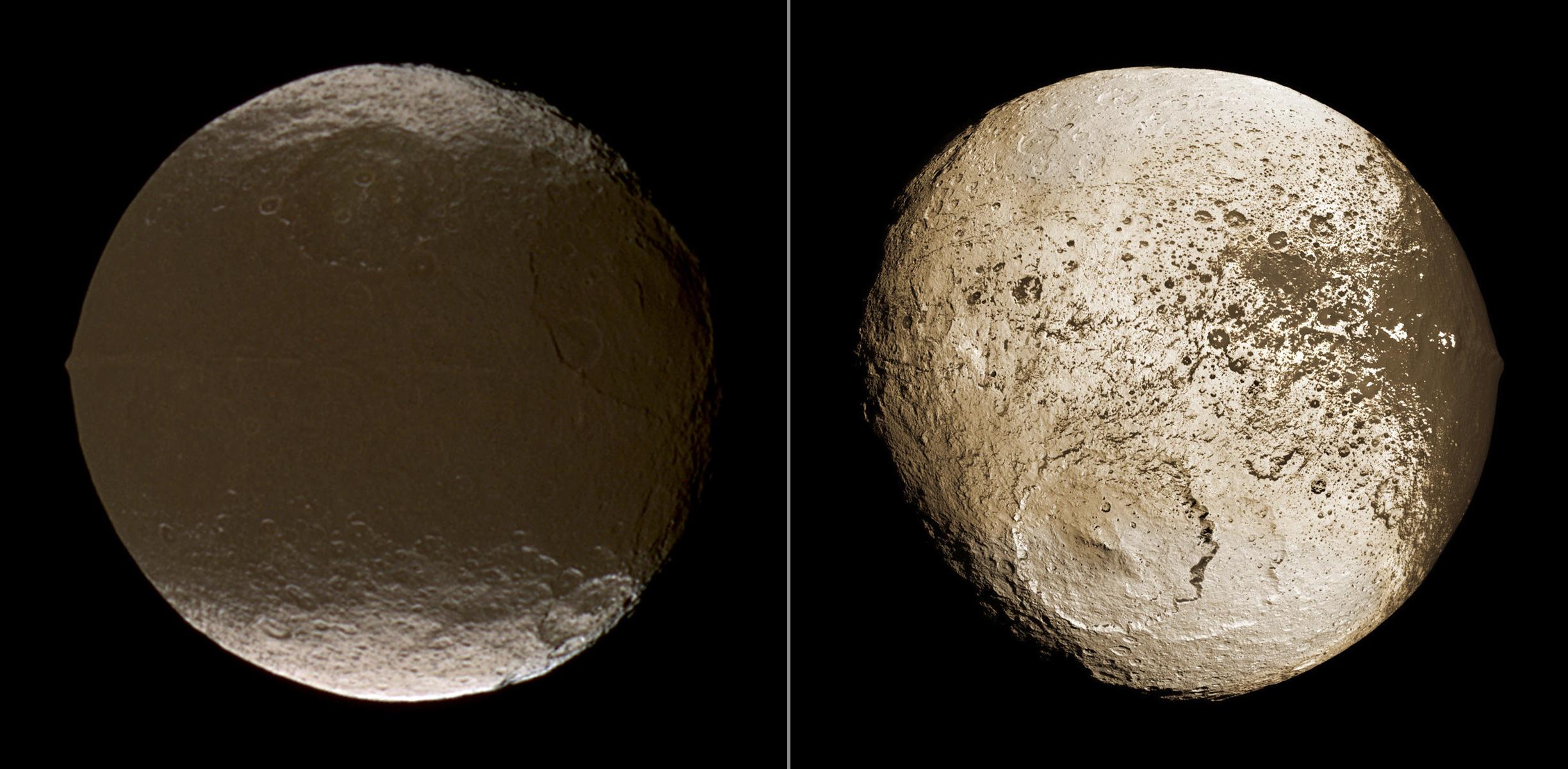
On one side of Saturn, Cassini could see a point of light. On the other, he lost it. Look at these two views of Iapetus. How could the same moon slip out of sight through his telescope?
What did Cassini work out?
One face of Iapetus reflected much more light than the other. The moon always keeps the same face towards Saturn, so its brightness as seen from Earth changes as it moves along its orbit. The Voyagers confirmed the difference. The Cassini spacecraft took these two portraits.