Mars
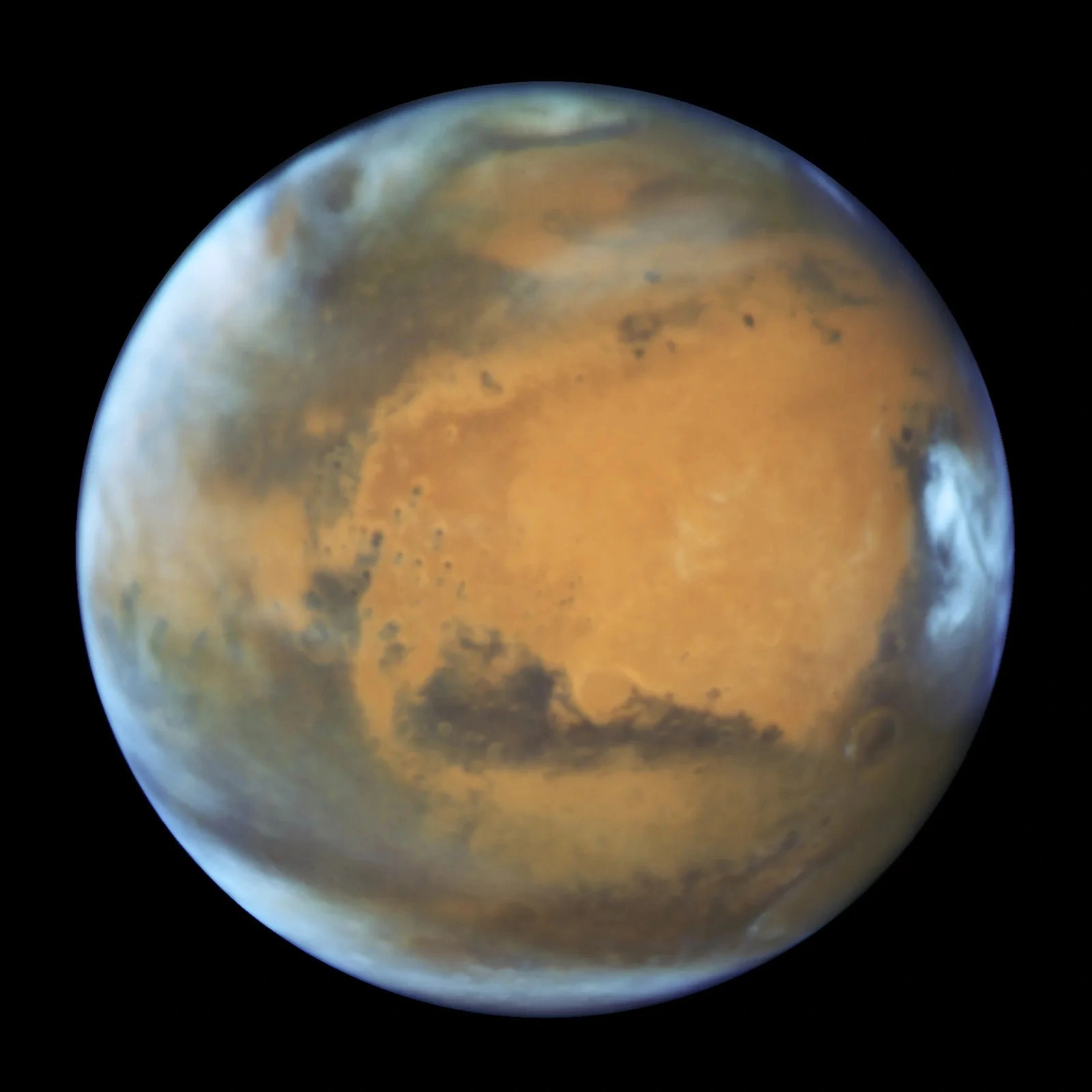
Image credit
NASA, ESA, Hubble Heritage Team (STScI/AURA), J. Bell (ASU), M. Wolff (Space Science Institute)Look closely at the edge of Mars. Even from 80 million kilometres away, Hubble could make out clouds.
The fourth planet from the Sun is a little over half as wide as Earth. Rust in its dust gives it that reddish hue. Today the wind sweeps across a cold desert, but riverbeds and deltas trace the paths water once took.
See Mars through Huygens’s telescope Planet facts · NASAChristiaan Huygens
How do you time the spin of another world?
On 28 November 1659, Huygens drew Mars as he saw it through his telescope. At seven that evening he sketched a dark marking. At half past nine he drew it again. Look where it sits in the second sketch.
Two evenings later, at seven, the markings were back almost where he had first seen them. On 1 December he put his estimate in his notebook. Mars took about 24 of our hours to turn once. Today we measure about 24 hours and 37 minutes relative to the stars.
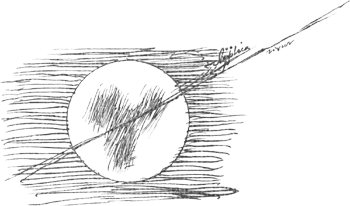 19:00
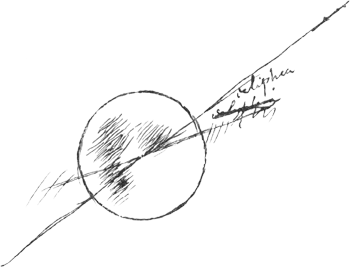 21:30
Can you spot Ingenuity?
Somewhere in this frame, a helicopter is flying over Mars. Tap where you see it.
A flight in Jezero
Perseverance was parked 80 metres from the take-off site. Its microphone picked up the hum of the blades.
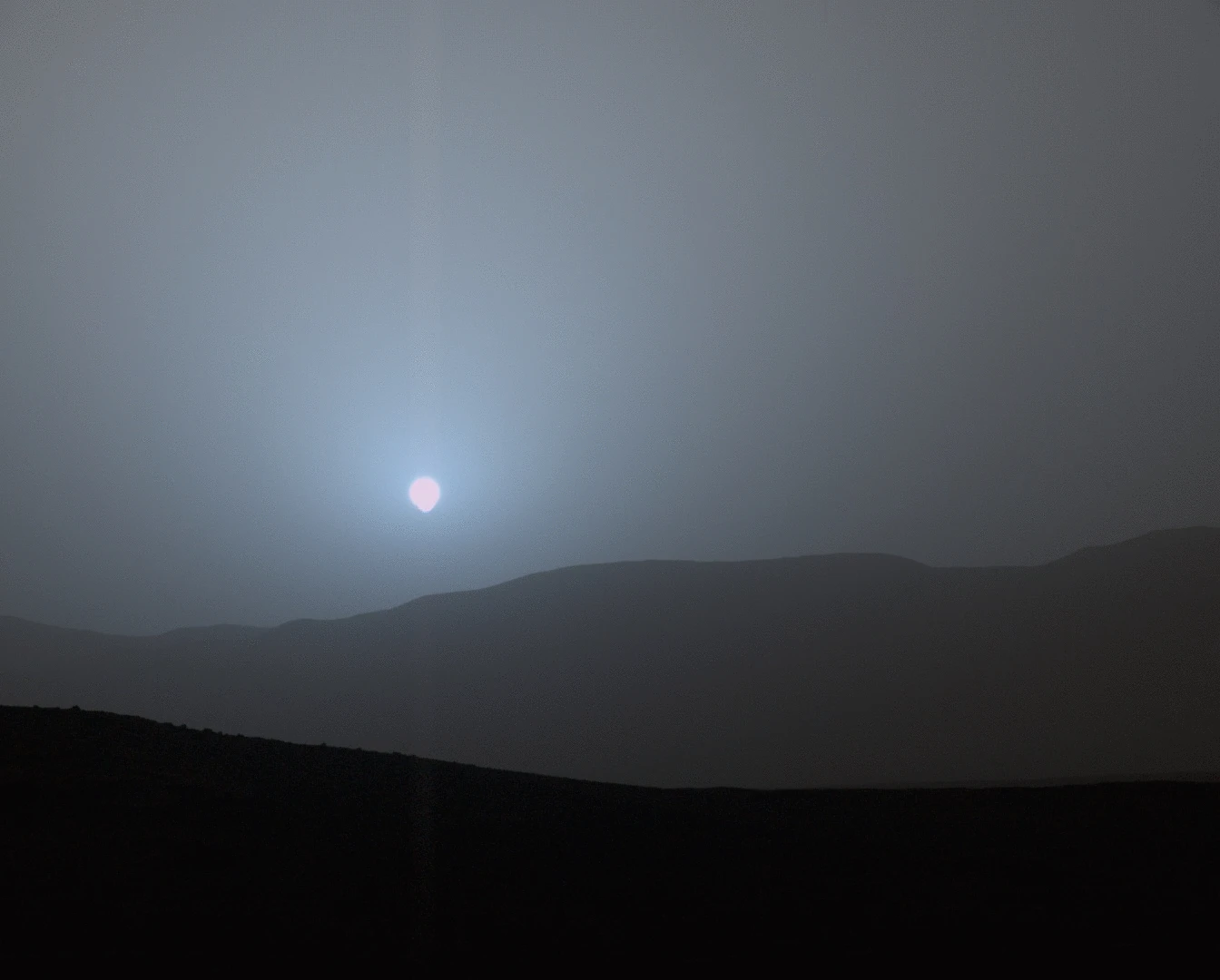
What colour is a Martian sunset?
Watch the sky just around the Sun as it slips behind the ridge. Curiosity took these four pictures over 6 minutes and 51 seconds.
Why that colour?
Fine dust in the Martian air scatters red and yellow light across more of the sky. Blue light stays closer to the Sun, giving it that blue halo. The team calibrated the camera colours.
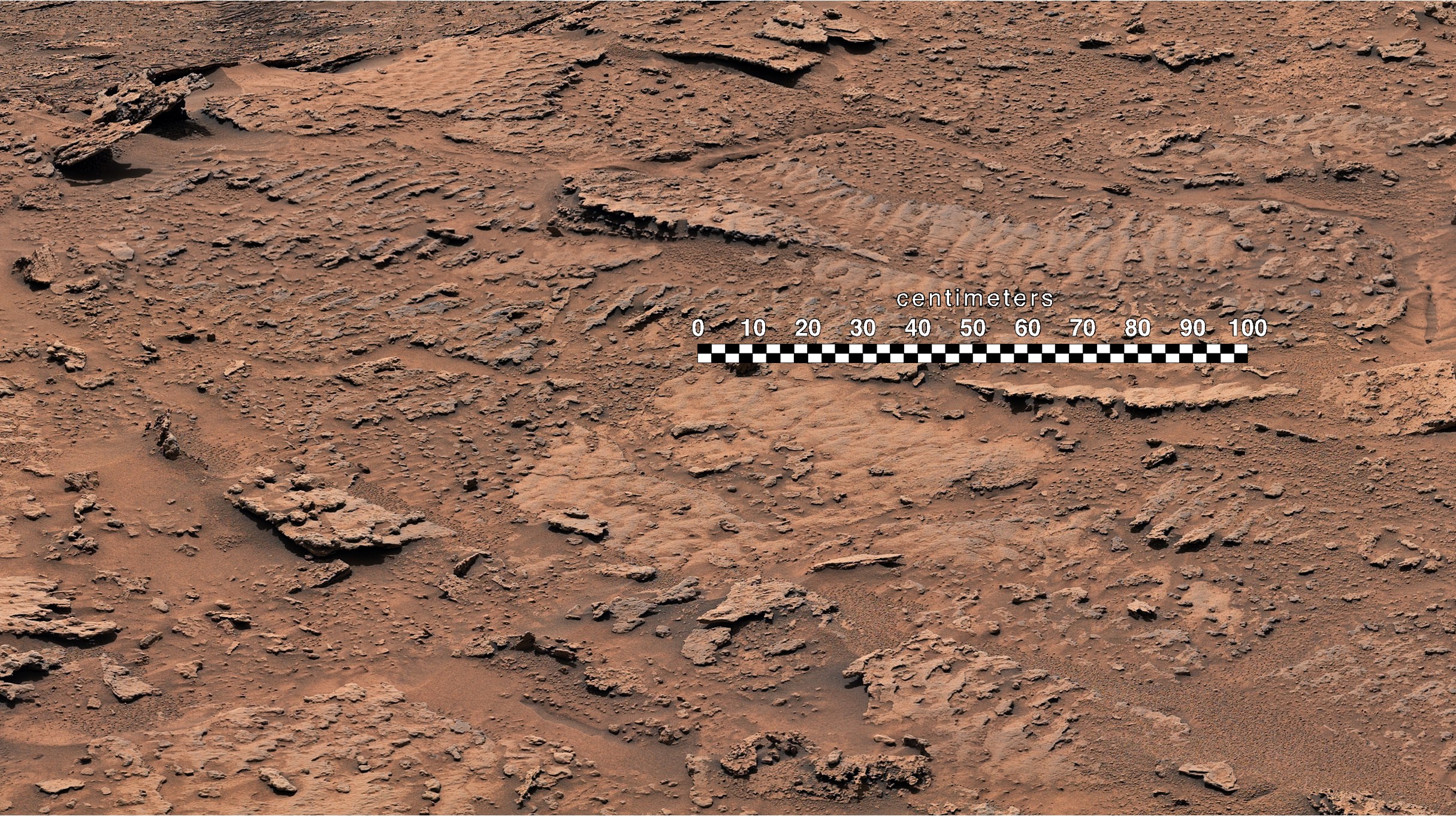
The waves left in stone
Follow a ridge across the rock. What does that repeating pattern remind you of?
A river written into a cliff
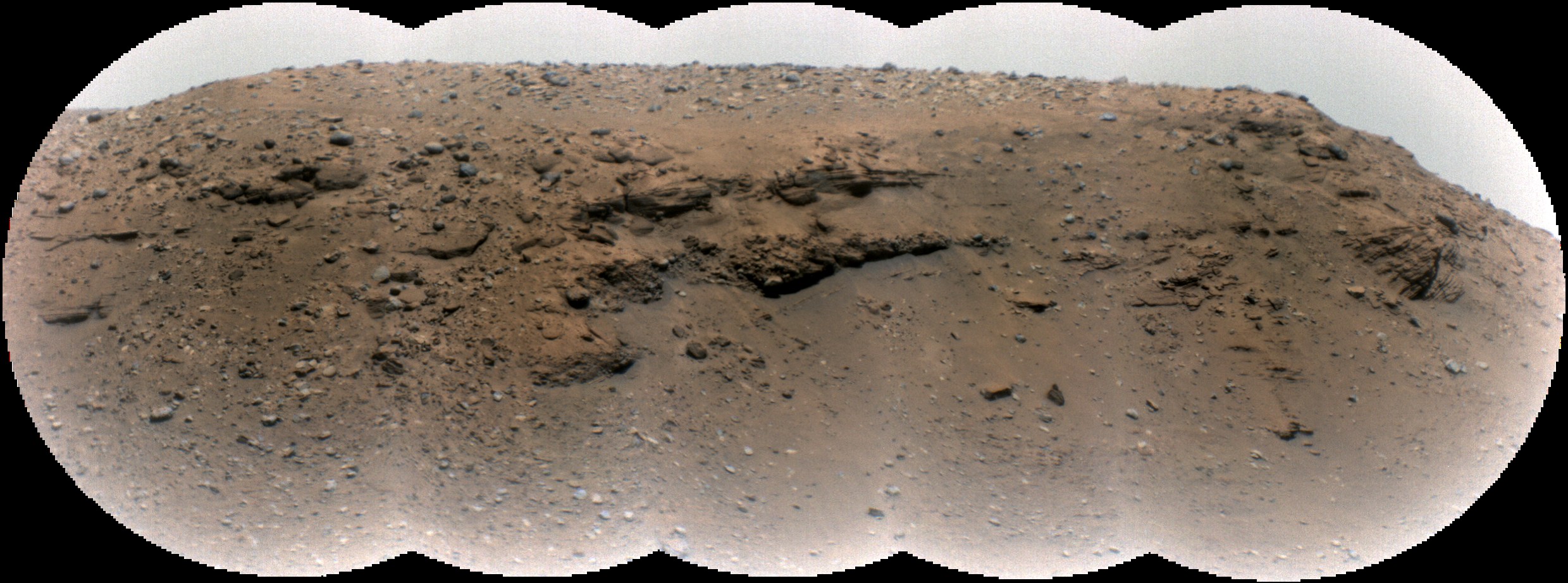
Follow one of the tilted layers with your eye. Perseverance photographed this cliff in Jezero crater from 2.25 km away.
Listen to the wind on Mars
Listen around the 20-second mark. SuperCam recorded this sound on 22 February 2021, on the mission’s fourth Martian day.