A star dims.
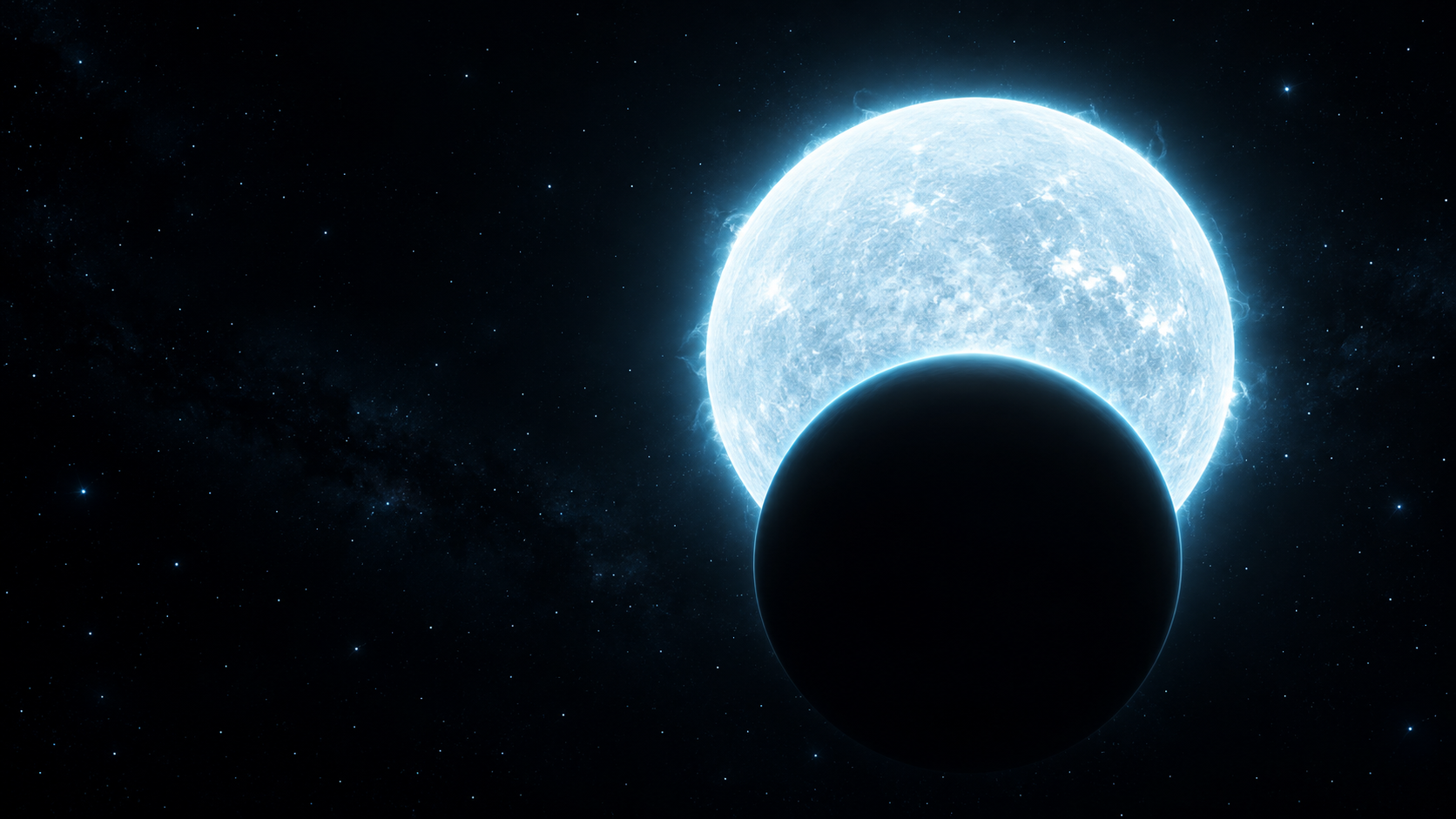
A planet crossing its star blocks a fraction of the light. Repeated dips can reveal its size and orbit.
NASA · transit methodWORLDS AROUND OTHER STARS
We rarely see these planets directly. We find them in the small, repeatable changes they cause in a star’s light and motion.
SCHEMATIC SIGNAL
A planet crossing its star blocks a fraction of the light. Repeated dips can reveal its size and orbit.
NASA · transit methodThe gravity of an orbiting planet makes its star shift towards and away from us. Spectra record that motion.
NASA · radial velocityAdvanced instruments can suppress starlight and isolate the much fainter glow of a planet.
NASA · direct imagingWHAT WE KNOW / WHAT REMAINS OPEN
Atmospheres, clouds and climates require further observations. Every method reveals a different part of the same system.
Read the NASA overview